An independent trade magazine on single-use respiratory, anaesthesia and critical care devices
Respiratory, anaesthesia and critical care devices, explained
Respiratory care and anaesthesia devices, explained. Each guide covers how a device is built, where it sits in the circuit and what the clinician checks at the bedside.
Start with the sections
Three sections, from the circuit to the airway
Each section opens with an index of its guides. Pick the circuits and their condensate, the filters and humidifiers that condition the gas, or the interfaces that reach the patient.
 01
01Ventilation and Anaesthesia Circuits
The tubes, connectors and traps that carry gas between the machine and the patient: ventilator and anaesthesia circuits, heated wire tubing and water traps, read against ISO 5367 and the 22 mm connector standard.
 02
02Filters and Humidification
The devices that clean and condition inspired gas: heat and moisture exchangers, bacterial and viral filters, and active heated humidification, with the tests and standards behind their stated figures.
 03
03Airway and Oxygen Delivery
The interfaces that reach the patient: CPAP, BiPAP and NIV masks, bubble CPAP for newborns, nebulizer kits for aerosol delivery, and catheter mounts with closed suction.
Section 1 of 3
Ventilation and Anaesthesia Circuits
The tubes, connectors and traps that carry gas between the machine and the patient: ventilator and anaesthesia circuits, heated wire tubing and water traps, read against ISO 5367 and the 22 mm connector standard.
Ventilation and Anaesthesia Circuits
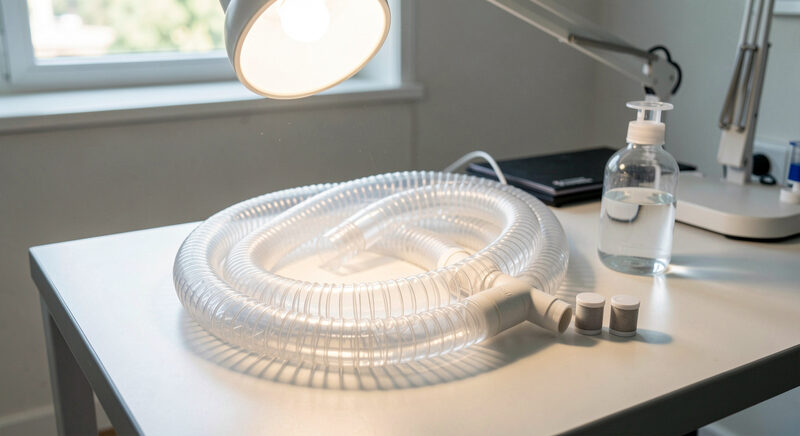
Ventilator Breathing Circuits
How adult, paediatric and neonatal ventilator breathing circuits differ in tube size, compliance, water traps and connections under ISO 5367.
Adult, paediatric and neonatal limbs and why the size matters.
Ventilation and Anaesthesia Circuits
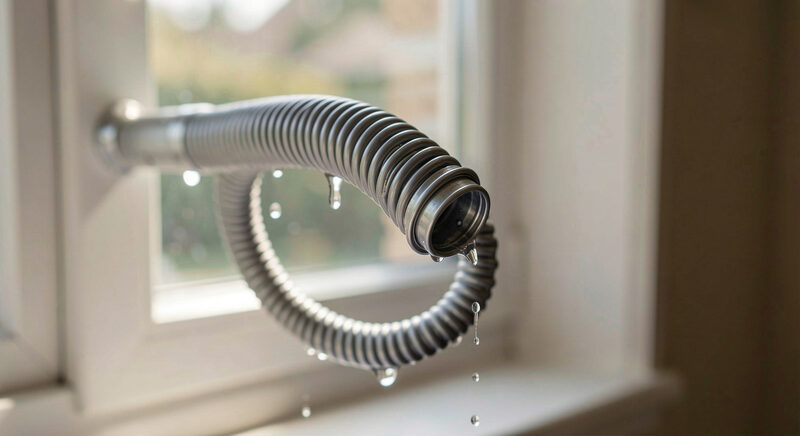
Heated Wire Breathing Circuits
Why heated wire circuits form condensation, how tube and room temperature interact, and the checks that keep rainout out of the airway.
Warm the tube wall and the water stays in the gas.
Ventilation and Anaesthesia Circuits
Anaesthesia Breathing Circuits
How circle and Mapleson anaesthesia breathing systems work, what soda lime does, and how circuits are chosen for adult and paediatric cases.
The circle system, its valves and the soda lime canister.
Ventilation and Anaesthesia Circuits
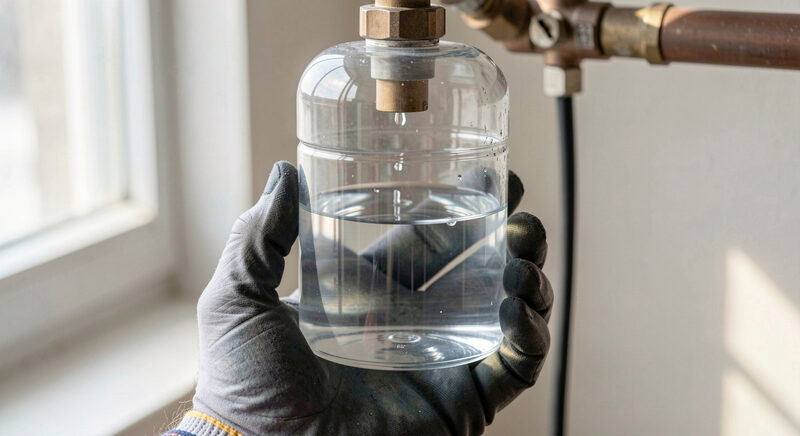
Water Traps in Breathing Circuits
What breathing circuit water traps collect, how double traps manage condensate, and how to empty and check them without breaking the circuit.
Catch the condensate before it reaches the airway.
Ventilation and Anaesthesia Circuits
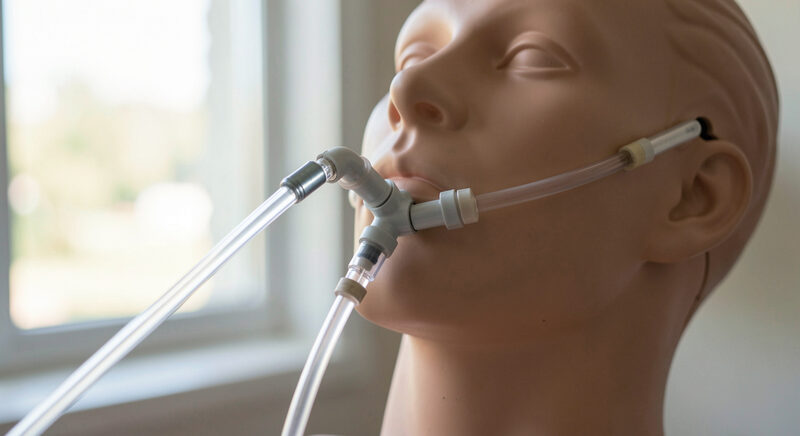
Reading a Detailed Hospital Bill: Codes and Dates
What an itemised hospital statement contains, how CPT codes map to services, and how to check dates of service before paying or disputing a charge.
Ventilation and Anaesthesia Circuits
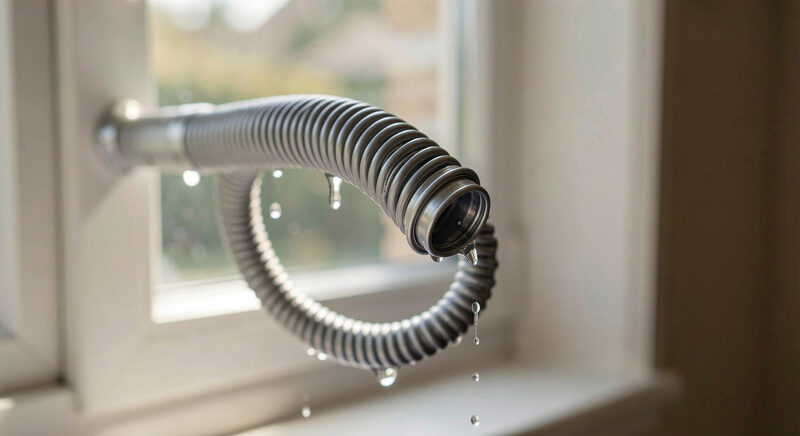
Symptoms and Prevention: What Patients Read First
How general medicine information sites frame common symptoms, screening and prevention, and the practical signs that mean a consultation should not wait.
Section 2 of 3
Filters and Humidification
The devices that clean and condition inspired gas: heat and moisture exchangers, bacterial and viral filters, and active heated humidification, with the tests and standards behind their stated figures.
Filters and Humidification
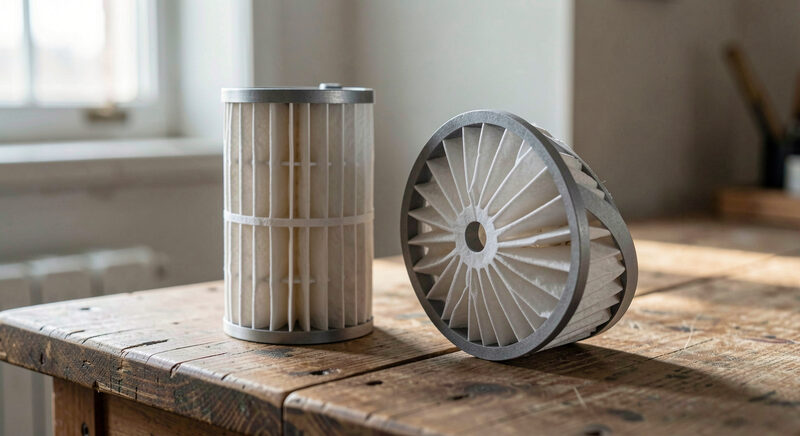
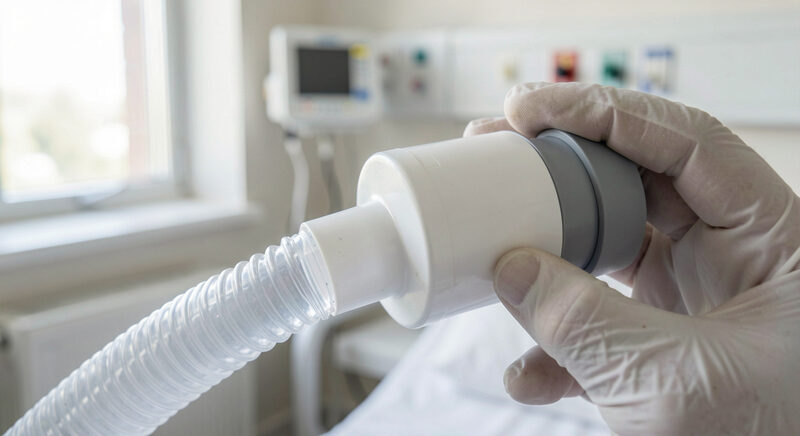
Heat and Moisture Exchanger Filters
How HME filters recover heat and moisture, the hygroscopic, hydrophobic and combined types, and how tidal volume changes their efficiency.
Passive humidification, and its limits at high tidal volume.
Filters and Humidification
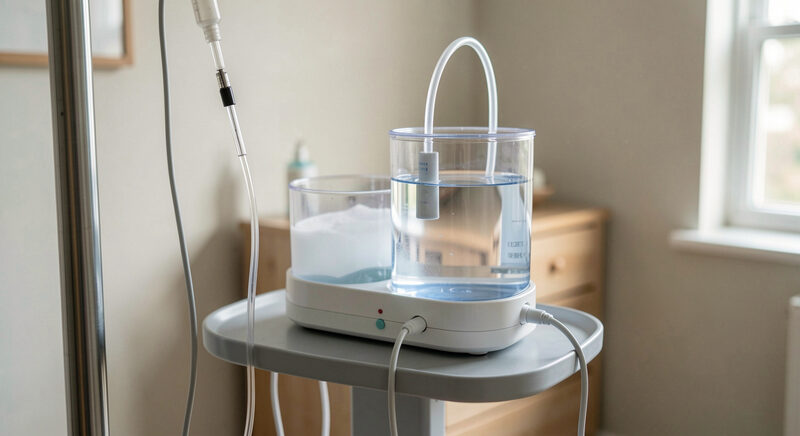
Bacteria and Viral Filters
What bacterial and viral filters capture in a breathing circuit, how electrostatic media work, and where filters sit to protect patient and machine.
What the filter captures, and where it sits to do it.
Filters and Humidification
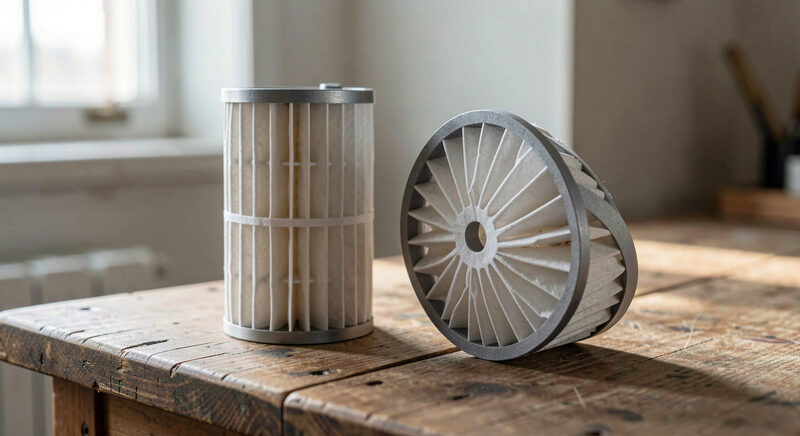
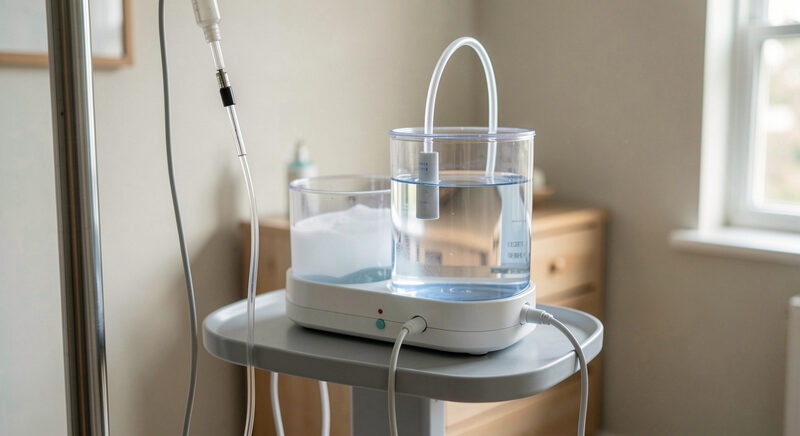
Humidification in Invasive Ventilation
Active heated humidification against passive HMEs: target temperature, condensation risk and the checks that keep inspired gas conditioned.
Active against passive, chosen per patient.
Filters and Humidification
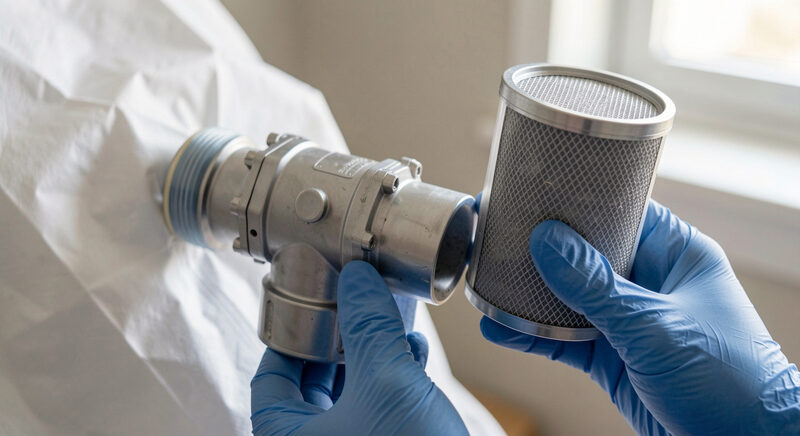
Infection Control in Shops and Small Premises
A practical starting point for small shops: written staff rules, a notice customers actually read, and the records that hold up when an inspector asks.
Filters and Humidification
Family Constellations: Session, Method, Critique
A plain account of what happens in a family constellation session, how practitioners describe the method and how critics and researchers assess it.
Filters and Humidification
Care Homes Near Aubenas: Daily Life, Admission, Costs
How a care home near Aubenas works: daily life, the admission file, French fees, APA and social aid, and what families check before signing.
Filters and Humidification
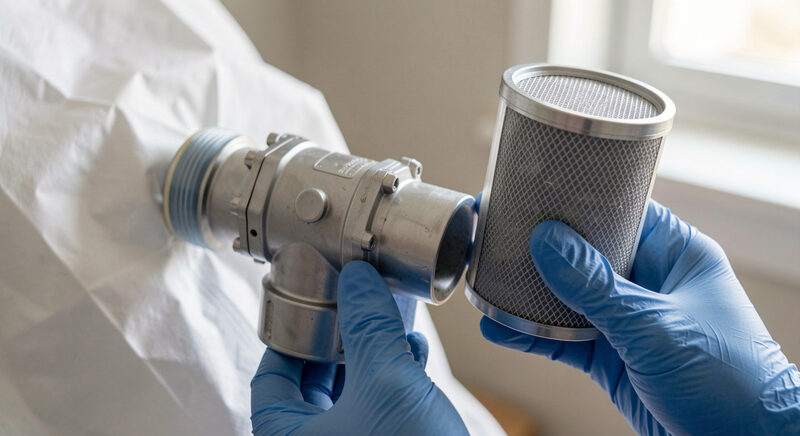
Ventilator Expiratory Filters
What the expiratory filter on a ventilator protects, where it sits before the exhalation valve, and how condensate and nebulized drugs can block it.
Protect the machine, then watch the filter for rising resistance.
The bench in pictures
Five views from the guides
Five photographs from the guides below, each with the page that explains the scene in full.
Field note 1
Circuits sized to the patient
Adult, paediatric and neonatal limbs differ in diameter and compliance, and in small patients that decides whether the set volume reaches the lungs.
Field note 2
Filters that condition and clean
An HME returns heat and moisture from the breath, and the same device often removes particles. Its efficiency falls as tidal volume rises.
Field note 3
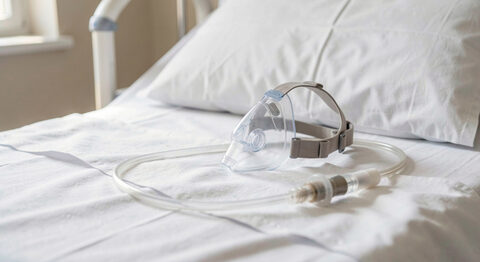
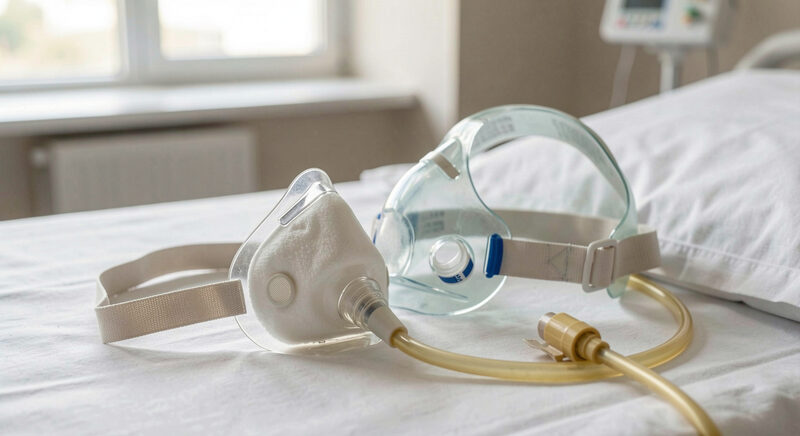
The interface is the therapy
Pressure that leaks around a mask does not reach the airway, so fit and leak are checked as carefully as the machine setting.
Field note 4
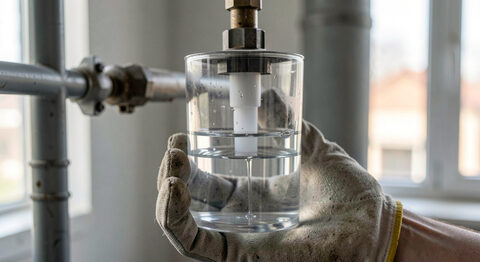
Where the condensate goes
Warm gas cools in the limb and gives up its water. A trap at the lowest point keeps that liquid out of the airway.
Field note 5
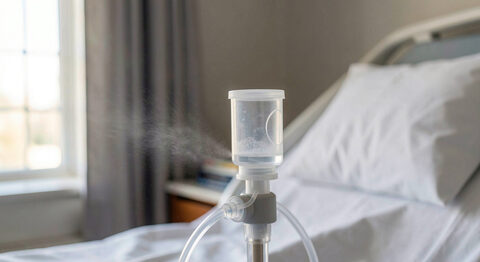
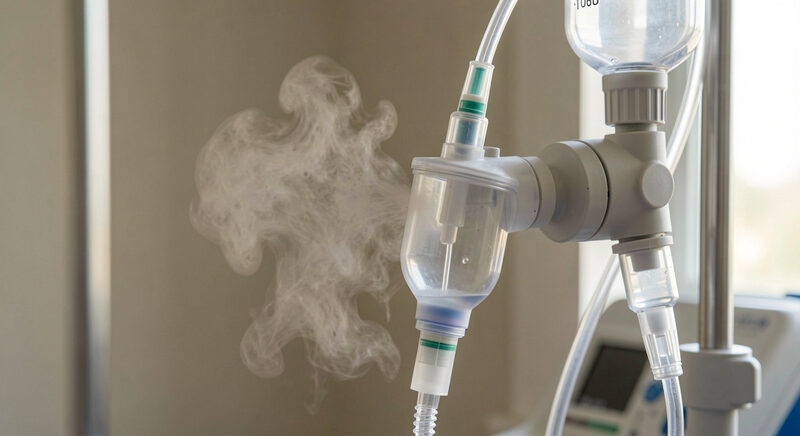
Getting the drug to the lung
Nebulizer type, circuit position and bias flow decide how much of an aerosol dose actually reaches the patient.
Section 3 of 3
Airway and Oxygen Delivery
The interfaces that reach the patient: CPAP, BiPAP and NIV masks, bubble CPAP for newborns, nebulizer kits for aerosol delivery, and catheter mounts with closed suction.
Airway and Oxygen Delivery
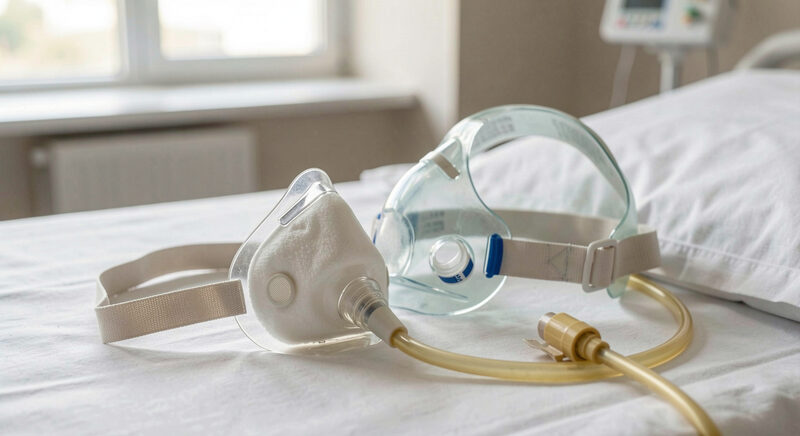
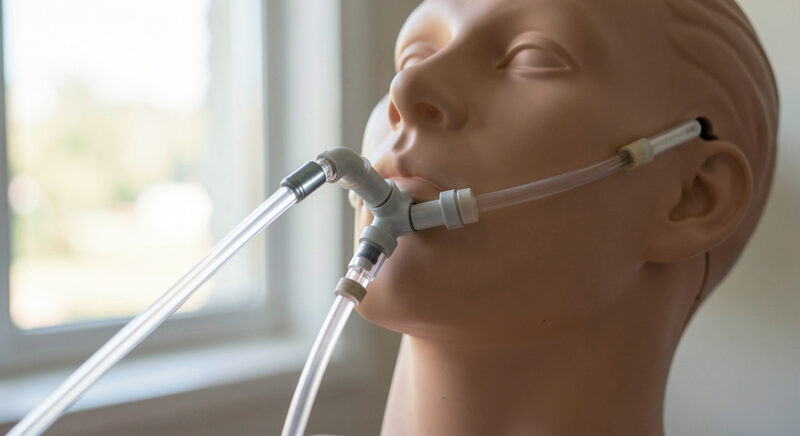
CPAP, BiPAP and NIV Masks
How CPAP, BiPAP and NIV interfaces differ, what mask fit and leak mean for therapy, and how to judge an interface at the bedside.
Seal, leak and skin: how an interface is judged.
Airway and Oxygen Delivery
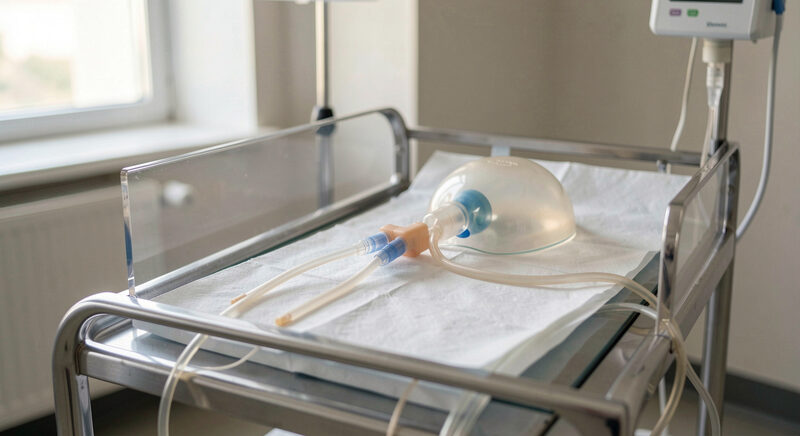
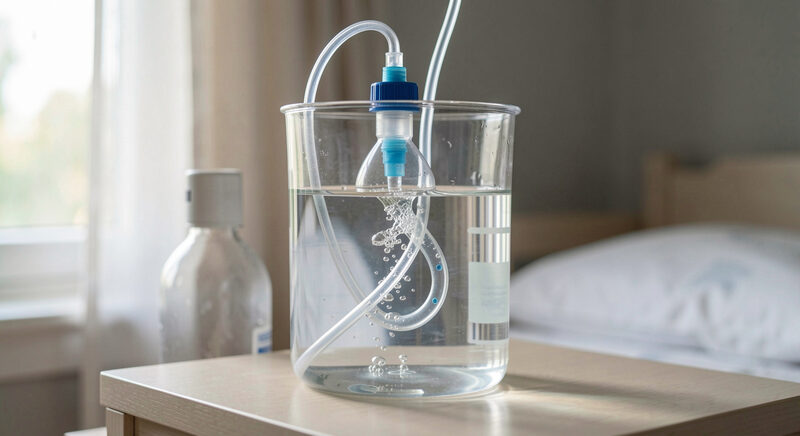
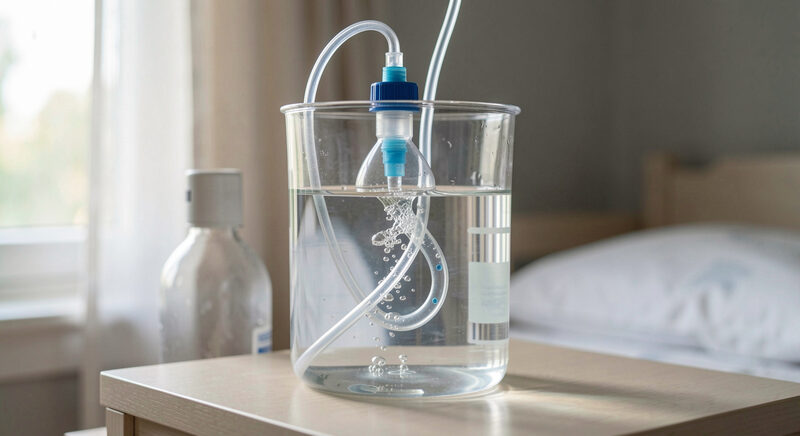
Bubble CPAP in Neonatal Care
How bubble CPAP generates pressure through a water column, why the circuit must keep bubbling, and how humidification and prongs are managed.
Pressure from a water column, and the checks it needs.
Airway and Oxygen Delivery
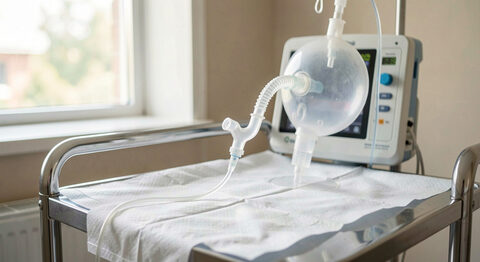
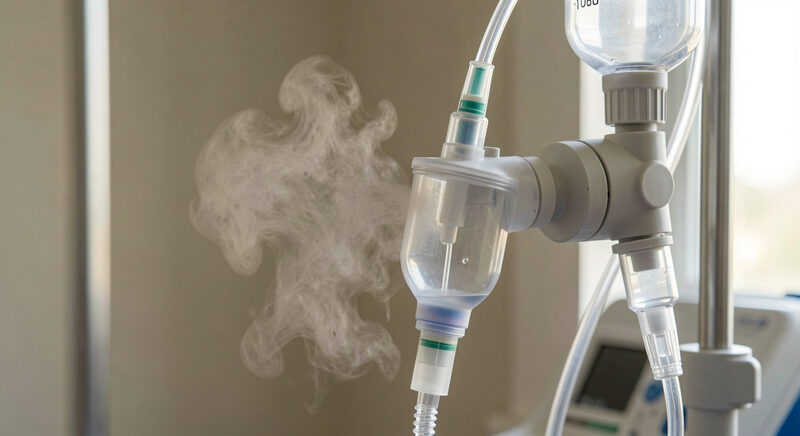
Nebulizer Kits and Aerosol Delivery
Jet, ultrasonic and vibrating mesh nebulizers, where to place a nebulizer in the circuit, and how bias flow and humidity change drug delivery.
Placement and bias flow decide the dose.
Airway and Oxygen Delivery
Catheter Mounts and Closed Suction
What a catheter mount does between the circuit and the airway, how closed suction systems work, and how to keep the assembly light and swivel-free.
Keep the circuit off the tube and suction in a sleeve.
Airway and Oxygen Delivery
Breath Meditation for a Complete Beginner
How to start breath meditation as a complete beginner, keep a daily practice going, and what a first multi-day retreat in Australia involves.
Airway and Oxygen Delivery
Dutch Basic Insurance: Physiotherapy Coverage Explained
How the Besluit zorgverzekering defines physiotherapy, which conditions are listed in annex 1 of article 2.6, and why the decree sets no amounts.
Airway and Oxygen Delivery
Diclofenac in the Netherlands: forms, dosage, safe use
How diclofenac and other anti-inflammatory painkillers are used in the Netherlands: gel or tablet, 50 mg dosing, prescriptions and when to ask a pharmacist.
Elsewhere
Other independent publications
For readers who need the practical side of infection control in shops and workplaces, an independent magazine sets out how a small business infection control plan is built, sourced from WHO, ECDC and national health agencies.
For readers who want to follow a UK imaging examination from the clinician's written request through to the returned report, Inside the Scanner explains each step, including how an X-ray image, shadow is formed, what contrast agents do and which rules govern dose and justification.
For readers who want to know what the official labeling actually says, the guide at MedlinePlus drug page main sections walks through MedlinePlus pages, DailyMed label searches and Drug Facts boxes, and explains why patient star ratings carry little weight.
For readers weighing everyday sweating against clinical hyperhidrosis, a Dutch-language reference covers underarm, hand, foot and facial triggers, fabric and pad choices, plus how deodorants differ from antiperspirants: everyday sweating and hyperhidrosis.
A German-language magazine, Sina Vital covers everyday health and vitality through plain explanations of nutrition, sleep, stress regulation and accessible movement, aimed at adults without medical training who want practical markers and a sense of how strong the evidence is.
For readers comparing private addiction treatment in the United States, private drug treatment centers set out treatment by substance, levels of care, sober living, cost and confidentiality questions families ask before deciding.
For breeders and students of canine genetics, coat colour inheritance explains locus by locus how pigment is passed on, from Punnett squares and DNA panels to dilution alopecia and double merle risk.
For the neurological emergency that follows macrocyclic lactone exposure in Collies and related breeds, MDR1 sensitivity in dogs sets out the genetics, the toxicity signs and the emergency protocol.
Sources and standards
The documents behind these guides
The Airway Ledger writes from published material rather than from opinion. These are the standards, reviews and regulator pages the guides rely on, so you can read the originals for yourself.
External source
ISO 5367:2023
Anaesthetic and respiratory equipment, breathing sets and connectors: leakage, flow resistance and the designation of breathing tubes.
External source
ISO 5367:2014
The previous edition of the breathing sets standard, still cited by many product documents and regulatory summaries.
External source
Bubble CPAP in Infants
A clinical review of CPAP in neonates, including the physiology and the evidence for bubble CPAP in low resource settings.
External source
FDA on reprocessed single-use devices
How the United States regulator treats devices labelled for single use when a hospital or third party reprocesses them.
External source
Humidification of ventilated patients
A review comparing heated humidifiers with heat and moisture exchangers, their control systems and their limits.
External source
HME humidification properties
A modelling and measurement study of how much moisture different heat and moisture exchangers return per breath.